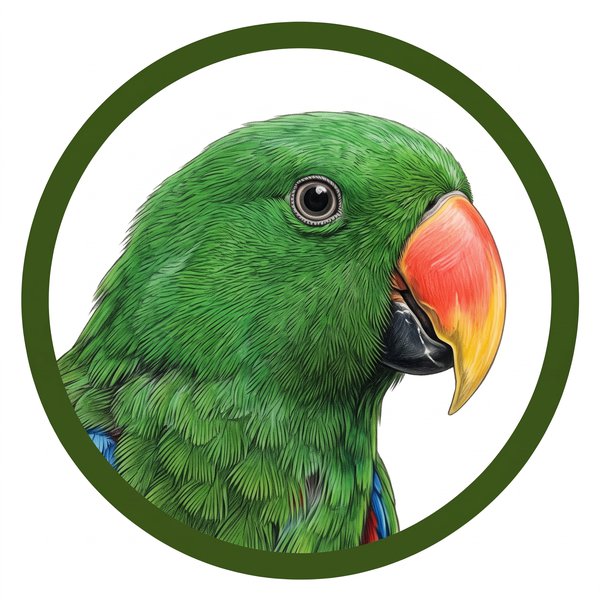
The Eclectus parrot (Eclectus roratus) is a species of psittaciform bird in the family Psittaculidae, native to the Solomon Islands, New Guinea, north-eastern Australia and the Moluccas.
| Kingdom | Animalia |
| Phylum | Chordata |
| Class | Aves |
| Order | Psittaciformes |
| Family | Psittaculidae |
| Genus | Eclectus |
| Species | Eclectus roratus |
The Eclectus parrot (Eclectus roratus) is a species of psittaciform bird in the family Psittaculidae, native to the Solomon Islands, New Guinea, north-eastern Australia and the Moluccas. It is the only surviving species of the genus Eclectus.
It measures between 38 and 42 cm in length and weighs between 400 and 600 g. It shows the most marked sexual dimorphism of all parrots: males are a bright emerald green with a coral-coloured beak, while females are a deep red with a blue belly and a black beak. The difference was so extreme that, in the early 20th century, the first European ornithologists even considered them to be two different species.
It lives in lowland forests and in more open regions with tall trees in Oceania. It lives in pairs or small groups, and forms flocks to feed on ripe fruit and to roost in the trees at night.
Its flight is powerful though fairly slow, with a calm downward wingbeat and short, frequent glides; on longer journeys it usually flies above the treetops.
Its diet consists of fruit, nuts, seeds, buds, flowers and nectar. Its favourite fruit is the pomegranate, although it also eats mangoes, guavas, cherries, bananas, melon and figs.
It nests in tree cavities, a scarce resource in its habitat. Unlike most birds with marked sexual dimorphism, the Eclectus parrot shows no role reversal: it is the female who incubates the eggs and spends most of her time in the nest, while the male goes out to find food for her and for the chicks.
The striking colouring of this species has an evolutionary explanation: the female's intense red acts as a true “beacon” that signals to other males the presence of a female with an available nesting cavity, while the male's green serves as camouflage against predators, such as peregrine falcons, while he searches for food in the forest canopy.
Its life expectancy varies greatly depending on the source, from about 20 years to more than 60, and several owners in captivity have documented individuals of more than 45 years without obvious signs of ageing.
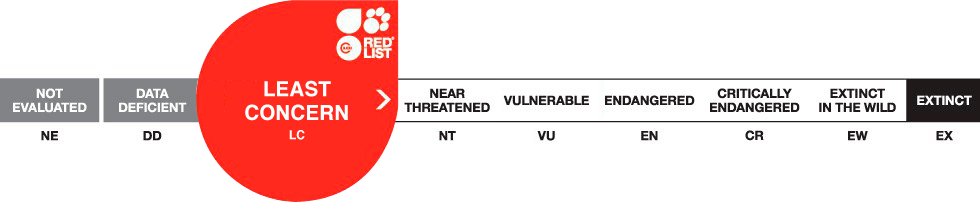
It is listed as a species of Least Concern by the IUCN, although it faces serious threats from habitat loss and the illegal wildlife trade.