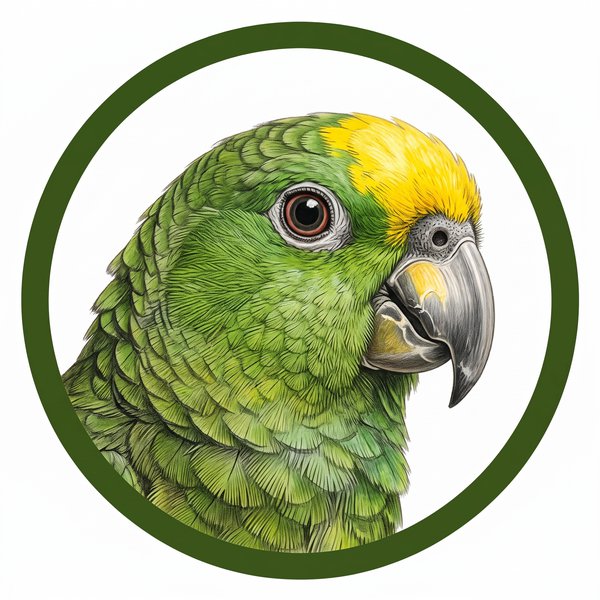
The yellow-crowned amazon, also known as the yellow-crowned parrot (Amazona ochrocephala), is a species of psittaciform bird in the family Psittacidae, native to almost all of tropical America, from southern Mexico to Peru, Brazil, Bolivia, Colombia and Venezuela.
| Kingdom | Animalia |
| Phylum | Chordata |
| Class | Aves |
| Order | Psittaciformes |
| Family | Psittacidae |
| Genus | Amazona |
| Species | Amazona ochrocephala |
The yellow-crowned amazon, also known as the yellow-crowned parrot (Amazona ochrocephala), measures between 35 and 37 cm in length. It has mainly green plumage, a yellow face and crown, a pale beak, orange eyes, a white eye ring, and a few red feathers on the back and wings.
Males and females hardly differ in plumage, which makes it hard to tell the sexes apart by sight: females usually have slightly more red on the wings and a slightly darker beak than males. Young birds have yellow restricted to the crown and lack the red of the adults.
It is strictly a lowland bird, living in tropical deciduous forests, thorny scrub, pine forests, mangroves, savannahs, farmland and even urban areas.
Up to ten subspecies are recognised, so closely related to one another that specialists have described their classification as a genuine “taxonomic headache”.
It feeds mainly on fruit, nuts, seeds, berries and peanuts. It is usually found in pairs rather than in large flocks.
It nests in tree cavities, where it lays three to four eggs. The incubation period lasts between 25 and 26 days, and the chicks stay in the nest for several weeks before becoming independent.
In captivity it is an excellent talker and is regarded as one of the most docile, intelligent and sociable parrots, capable of becoming a genuine conversationalist.
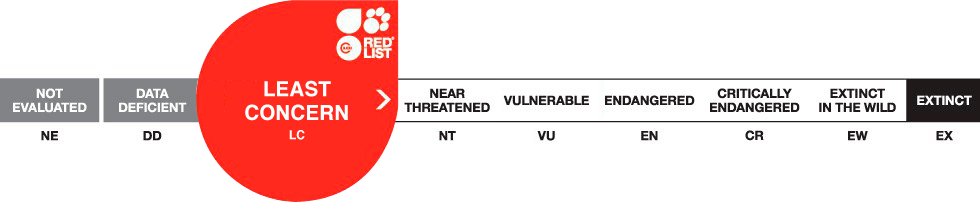
Although the IUCN lists it as a species of Least Concern, its wild populations are declining because of illegal trafficking for the pet trade and habitat loss.