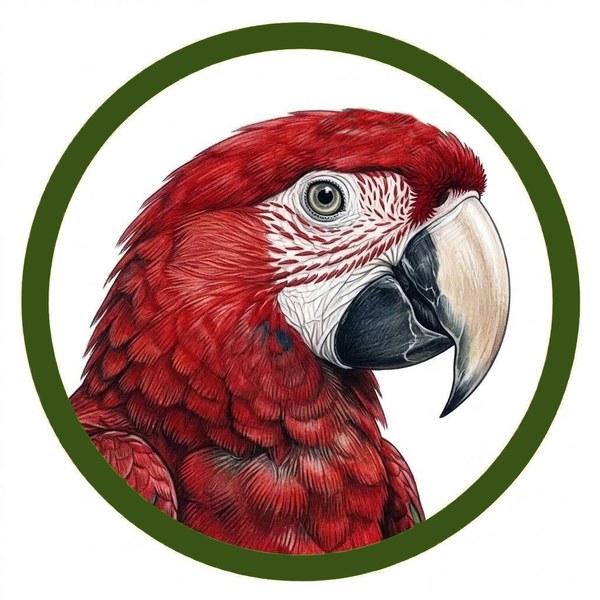
The red-and-green macaw (Ara chloropterus), also called the green-winged macaw, is a large psittaciform bird in the family Psittacidae, native to the tropical forests of northern and central South America.
| Kingdom | Animalia |
| Phylum | Chordata |
| Class | Aves |
| Order | Psittaciformes |
| Family | Psittacidae |
| Genus | Ara |
| Species | Ara chloropterus |
The red-and-green macaw (Ara chloropterus) is one of the largest macaws. Its plumage is an intense scarlet red, with green and blue tones on the wings. It has a white, bare face crossed by lines of small red feathers, and a large curved beak, ivory-coloured on the upper half and black on the lower.
It measures around 90 cm in length and can weigh more than a kilo. The lines of red feathers on its face distinguish it from the scarlet macaw, which it closely resembles.
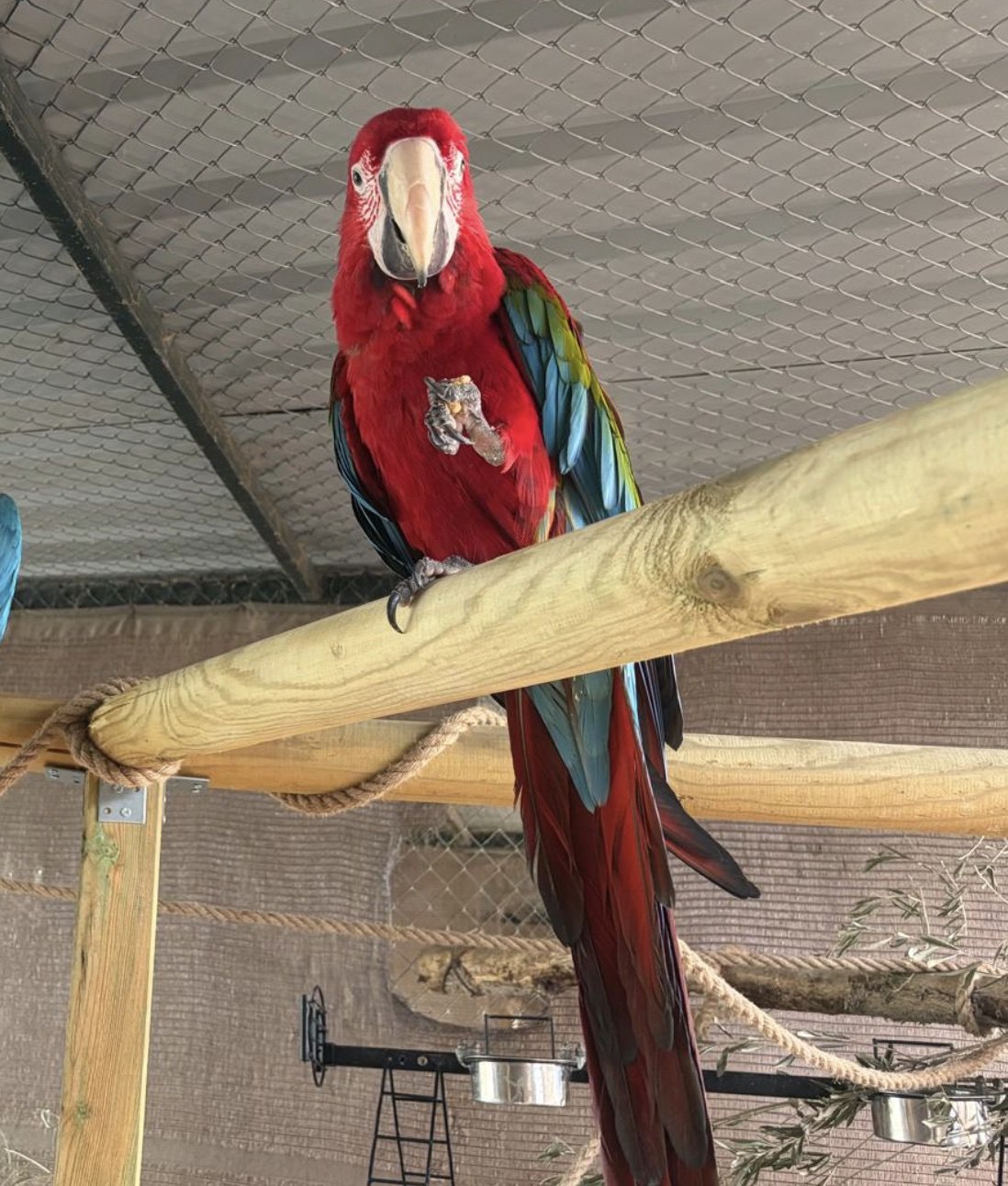
It lives in humid lowland tropical forests of northern and central South America, from Colombia and Venezuela to Brazil, Peru, Bolivia and Paraguay. It lives in pairs or small family groups.
It feeds mainly on seeds, fruit and nuts, which it cracks with its strong beak, and also on flowers and leaves. Like other macaws, in the wild it visits “clay licks”, clay walls that it licks to supplement its diet.
It nests in large tree hollows. The usual clutch is two or three eggs, which the female incubates for about 28 days. The chicks stay in the nest for about three months.
It forms very stable pairs, and its powerful squawk can be heard from a great distance through the jungle.
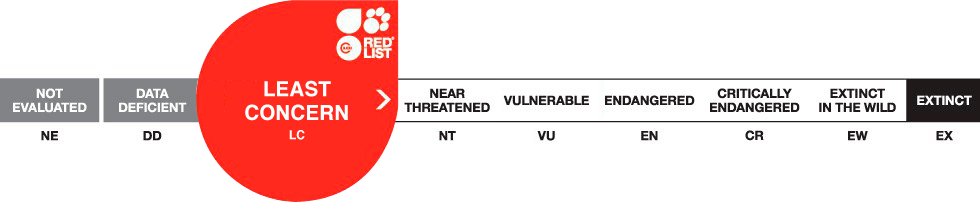
It is classified as “Least Concern” by the IUCN, although deforestation and capture for the pet trade affect its populations. It is listed in CITES Appendix II.