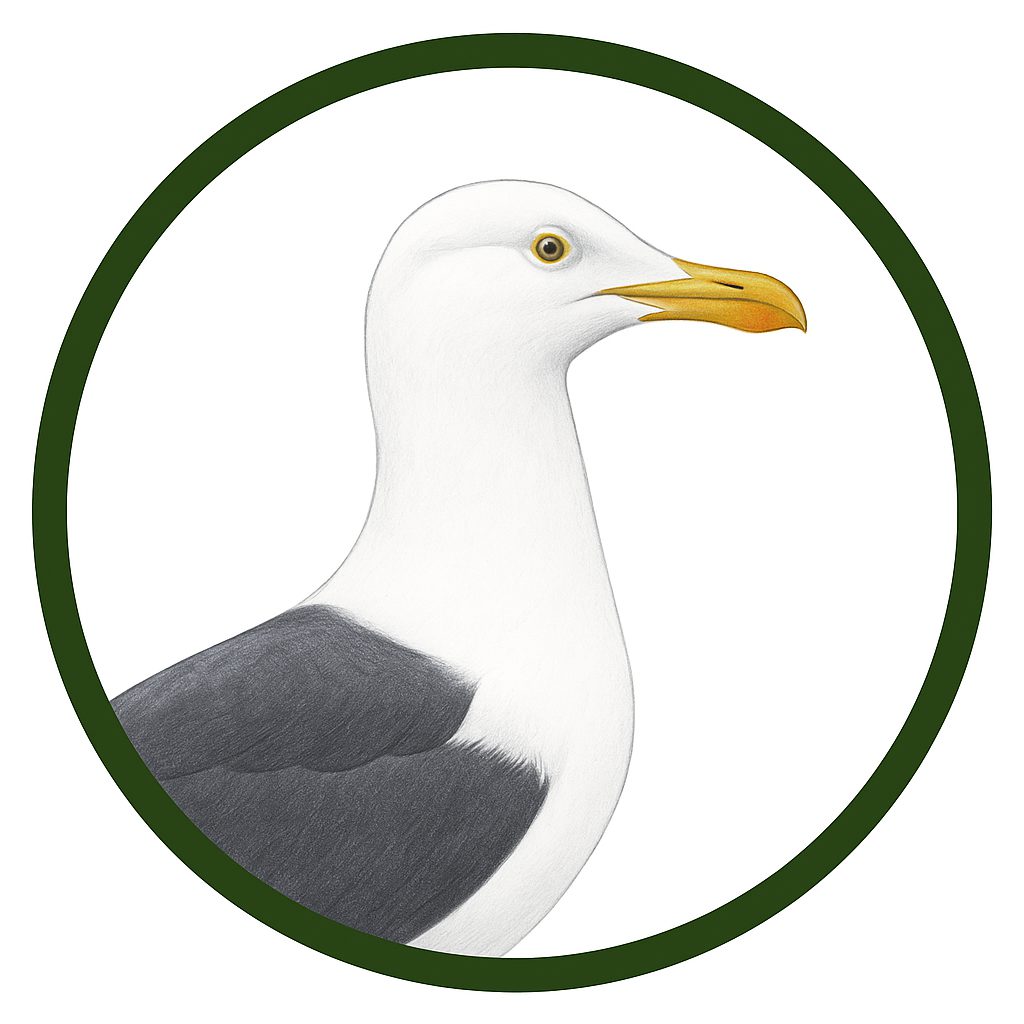
The lesser black-backed gull ( Larus fuscus ) is a gull of the family Laridae, smaller than the herring gull, with a black or very dark grey back and wings.
| Kingdom | Animalia |
| Phylum | Chordata |
| Class | Aves |
| Order | Charadriiformes |
| Family | Laridae |
| Genus | Larus |
| Species | Larus fuscus |
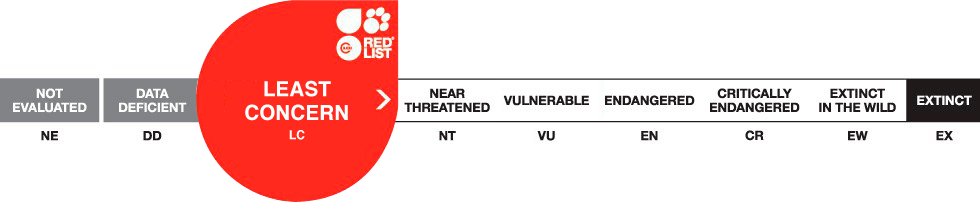
The lesser black-backed gull (Larus fuscus) is a gull of the family Laridae, smaller than the herring gull, with a black or very dark grey back and wings. Males weigh an average of 824 grams and females 708 grams, with a wing length of between 38.3 and 45 cm. The bill is yellow with a red spot at the tip. Juveniles have scaly, blackish-brown plumage and take up to four years to reach maturity.
It breeds in Europe, from the Nordic countries to the Mediterranean, and also winters in North Africa; some subspecies are distributed from Siberia to Central Asia. It occupies a multitude of habitats, both natural and urban, always linked to water: it prefers to breed in rocky areas on coasts and lakes, and feeds on beaches, wetlands and marshes.
It is omnivorous and opportunistic: it eats fish, insects, crustaceans, worms, starfish, molluscs, seeds, berries, small mammals, eggs and chicks of other birds, as well as scraps, waste and carrion.
It breeds in colonies on coasts and lakes, in nests on the ground or on cliffs. The clutch usually consists of three eggs.
The chicks prompt their parents to regurgitate food by pecking at the red spot on the tip of their bills, a key signal in their breeding behaviour.