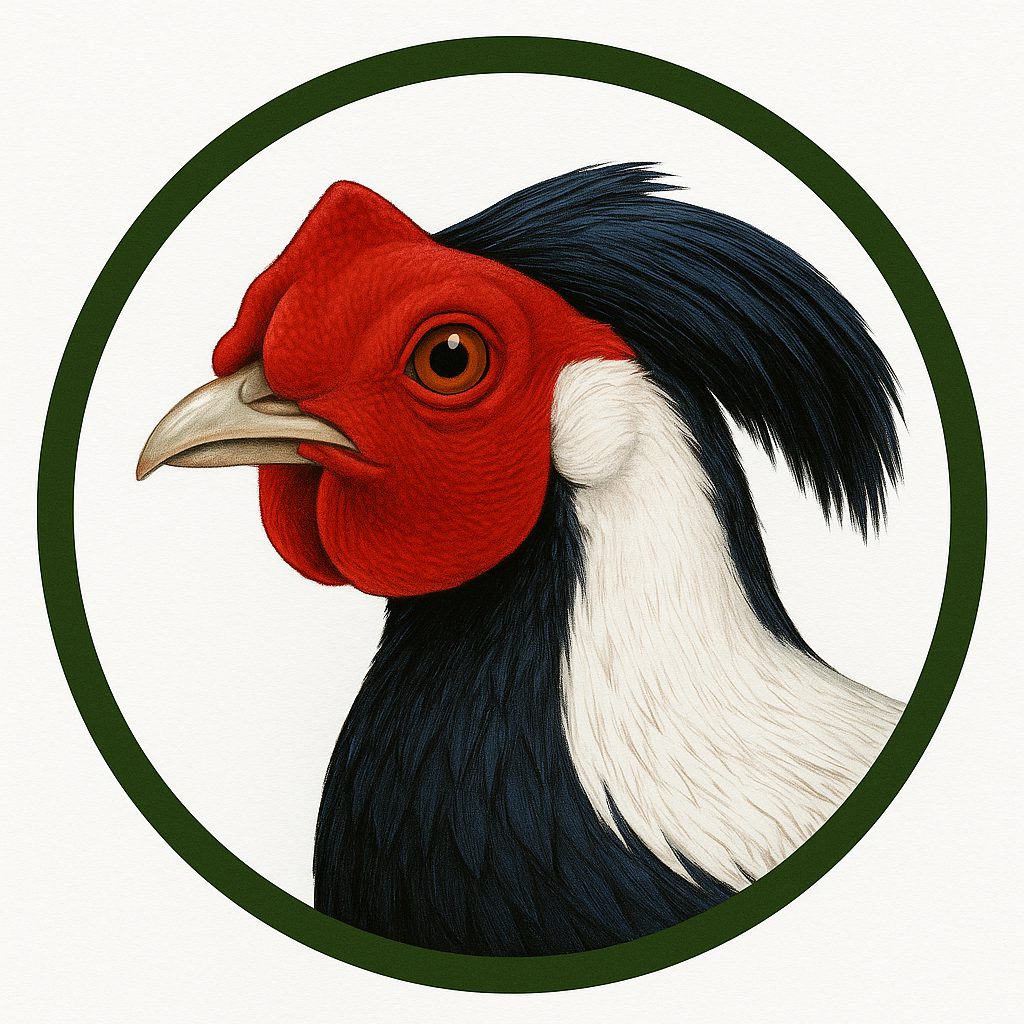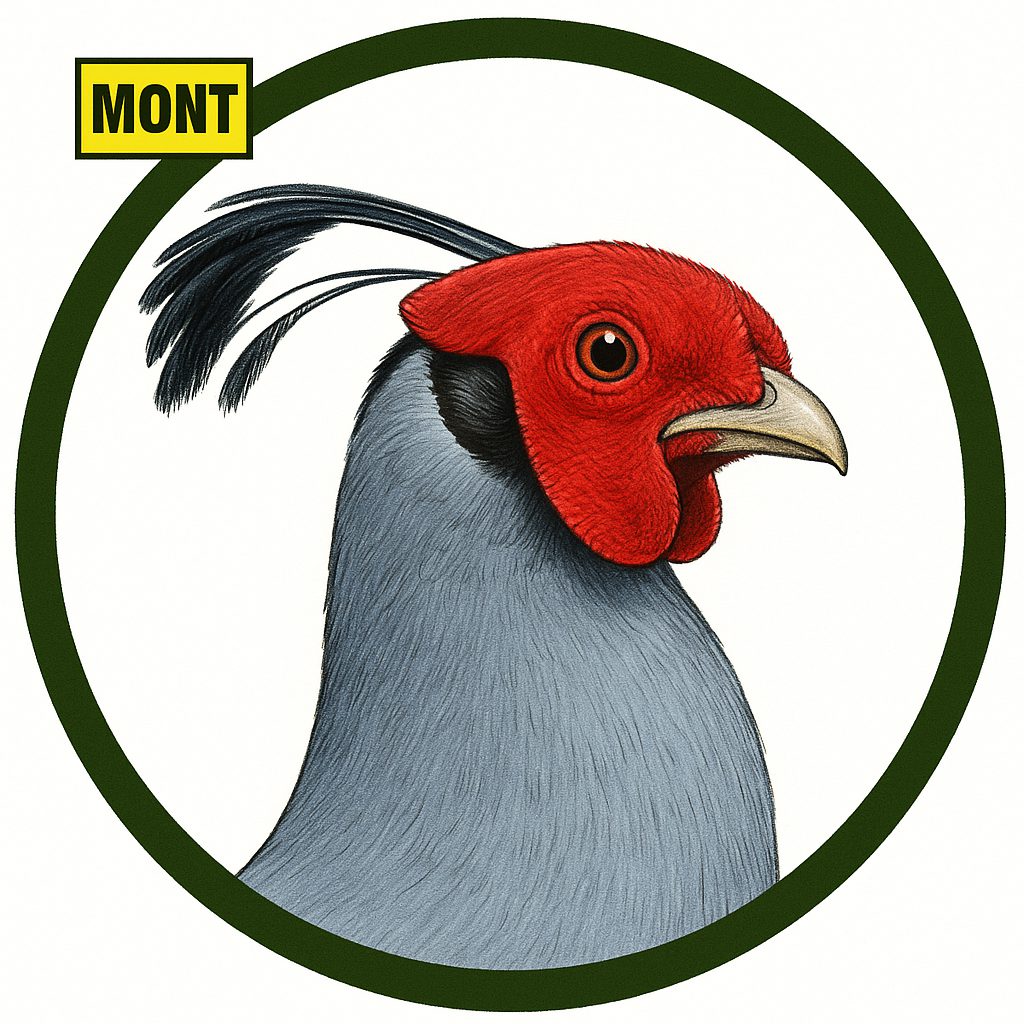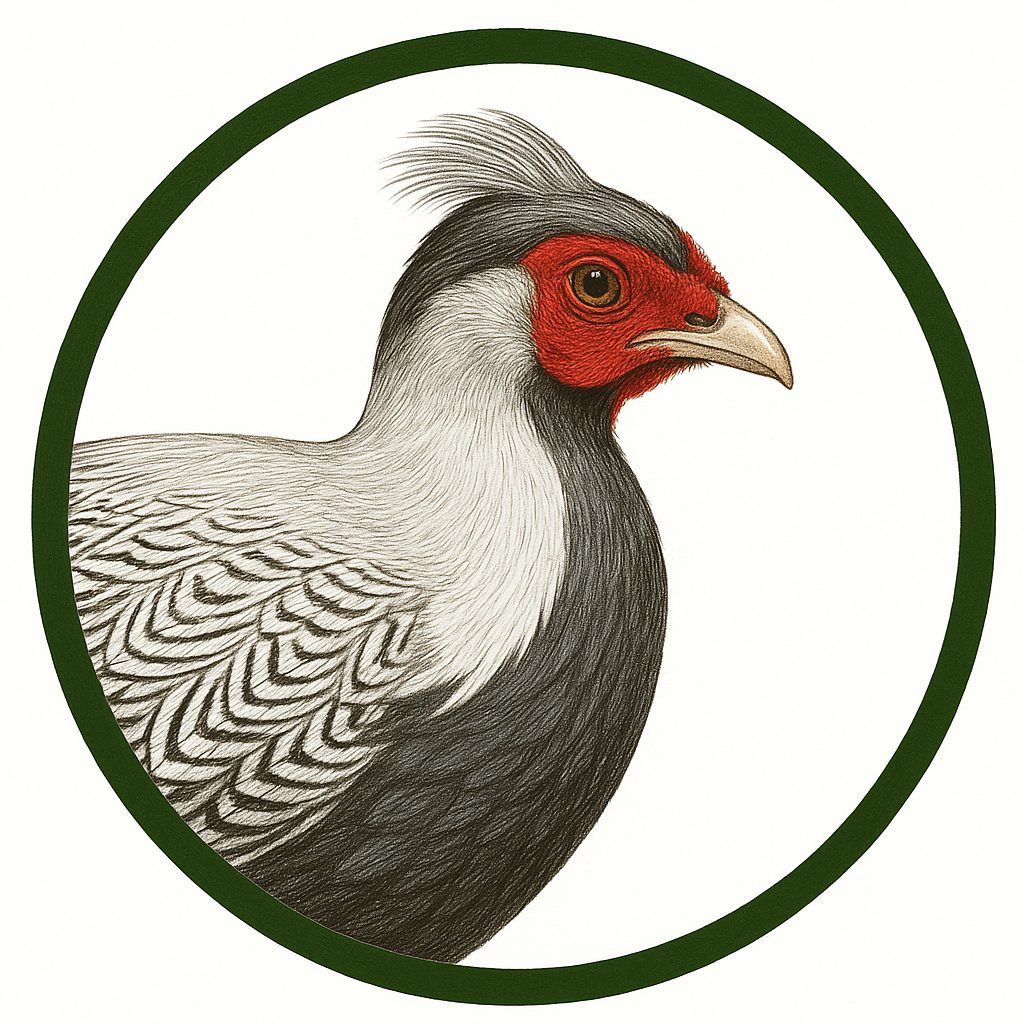
The silver pheasant (Lophura nycthemera) has unmistakable plumage: the male combines a silvery-white back, wings and tail (with some black markings) with glossy bluish-black underparts and crest, a bare red face and red legs…
| Kingdom | Animalia |
| Phylum | Chordata |
| Class | Aves |
| Order | Galliformes |
| Family | Phasianidae |
| Genus | Lophura |
| Species | Lophura nycthemera |
The silver pheasant (Lophura nycthemera) has unmistakable plumage: the male combines a silvery-white back, wings and tail (with some black markings) with glossy bluish-black underparts and crest, a bare red face and red legs; the female is brown, much more discreet. Depending on the subspecies, the male may measure between 70 and 125 cm in total length (including a tail of up to 75 cm) and weigh between 1.1 and 2 kg; the females are noticeably smaller. "Jones's" refers to the subspecies Lophura nycthemera jonesi, described in 1903 by Eugene Oates, one of the fifteen geographical races recognised within the species.
The species is found across southern and central China and Indochina. The subspecies jonesi specifically occupies eastern Burma, south-western Yunnan province in China and central Thailand, in mountain and bamboo forests.
It is a ground-dwelling, omnivorous bird that forages by scratching through the leaf litter: seeds, tender shoots, berries and small invertebrates make up the bulk of its diet in the wild.
The breeding season begins in mid-March, when the males perform showy courtship displays and may form harems of two to five females. Each female lays 6 to 12 pinkish eggs, which she incubates alone for 25-26 days. Birds reach breeding maturity in their second year of life.
The silver pheasant has up to fifteen described subspecies across its extensive range, including the subspecies jonesi that gives this variety its name; some authors consider that several of these geographical forms are in fact a continuous gradient of colouring (a cline) rather than clearly distinct races.