Hume's pheasant (Syrmaticus humiae) is a large pheasant, up to 90 cm long, belonging to the family Phasianidae.
| Kingdom | Animalia |
| Phylum | Chordata |
| Class | Aves |
| Order | Galliformes |
| Family | Phasianidae |
| Genus | Syrmaticus |
| Species | Syrmaticus humiae |
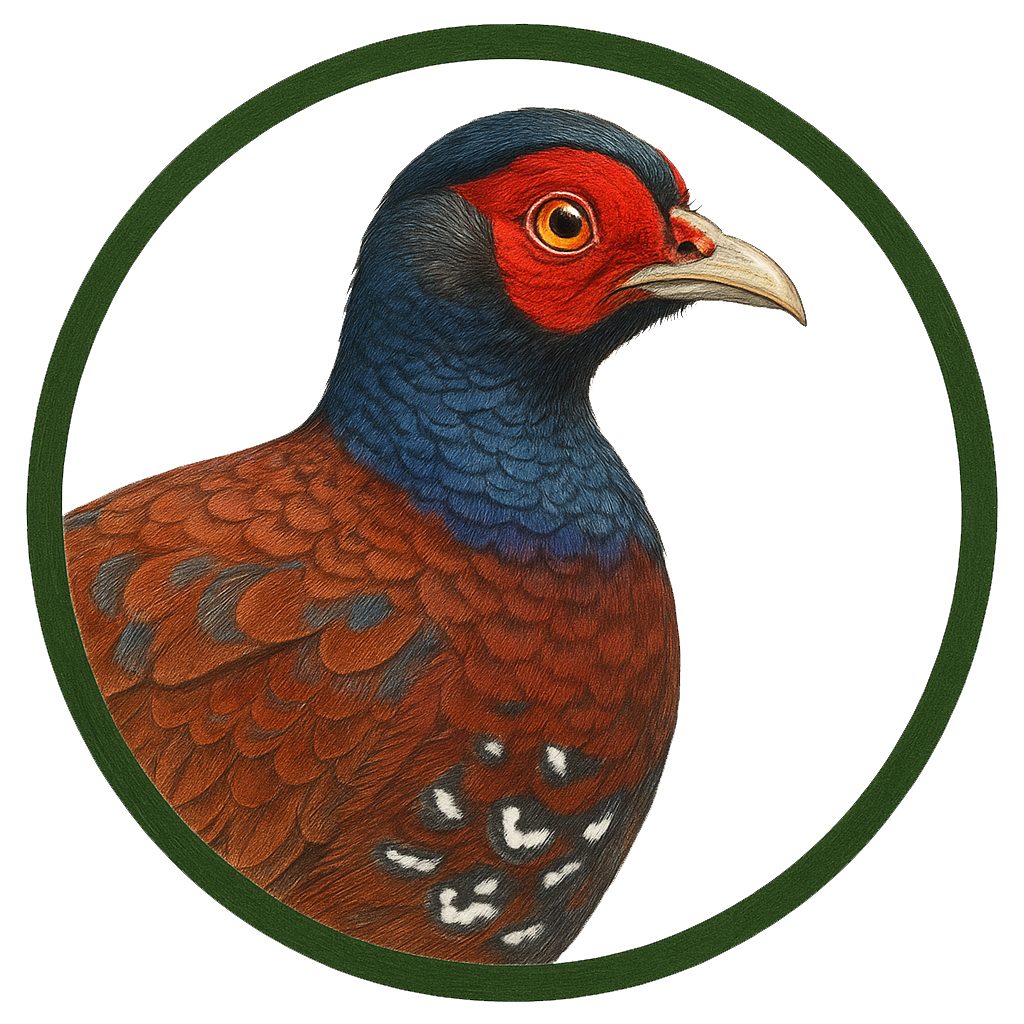
Hume's pheasant (Syrmaticus humiae) is a large pheasant, up to 90 cm long, belonging to the family Phasianidae. The male has a long whitish-grey tail barred with black and chestnut, a brownish-grey head with bare red facial skin, a yellowish bill, an orange-brown iris and metallic blue sheen on the neck, as well as a white wing bar. The female is tawny brown, with a white throat, a white tail tip and a buff belly.
It lives in forests of north-eastern India, Burma (Myanmar), south-western China and northern Thailand, where it is considered a rare and little-known bird because of its fragmented distribution and the loss of forest habitat.
It feeds mainly on plant matter —seeds, shoots and berries—, occasionally supplemented with small invertebrates that it finds while foraging on the forest floor.
It is a difficult species to breed in captivity, as the females lay small clutches, normally of one or two eggs, which may be repeated four or five times over the season to a total of around ten eggs. Incubation, carried out by the female alone, lasts 27 to 28 days. The laying season begins in early spring.
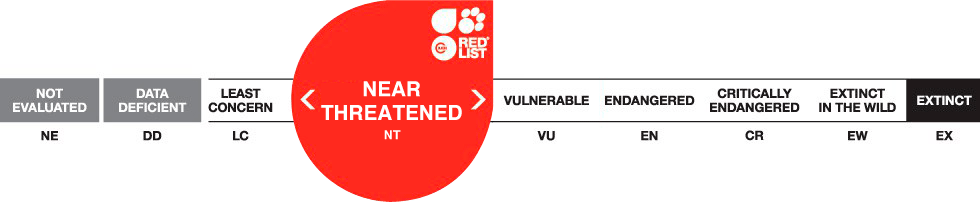
The species is named in honour of Mary Ann Grindall Hume, wife of the British naturalist Allan Octavian Hume. It is the state bird of the Indian states of Manipur and Mizoram, and because of its rarity, hunting pressure and habitat loss it is listed in Appendix I of CITES.