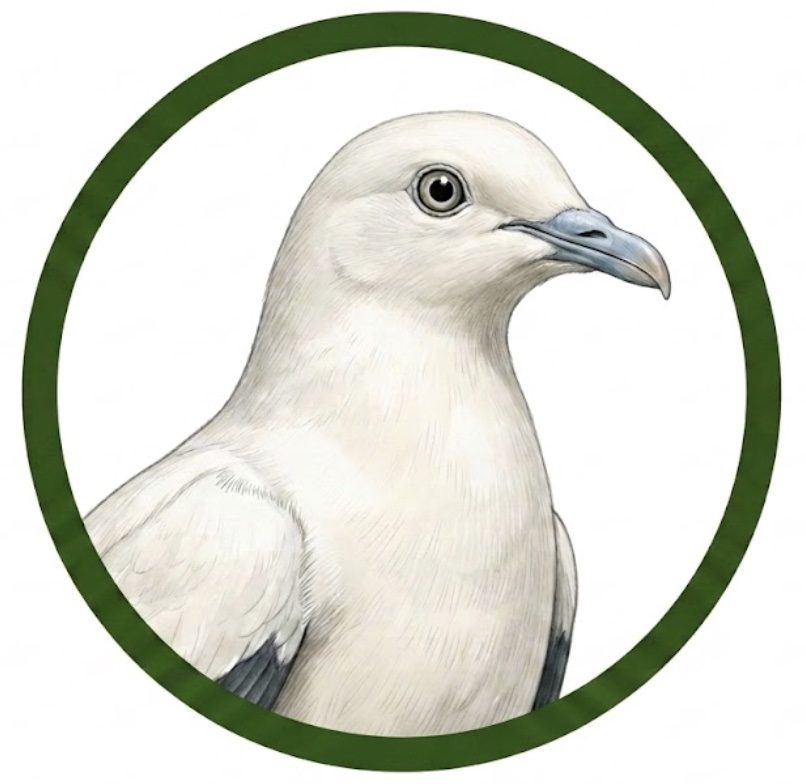
The pied imperial pigeon (Ducula bicolor) is a large species of pigeon described by Scopoli in 1786, belonging to the family Columbidae.
| Kingdom | Animalia |
| Phylum | Chordata |
| Class | Aves |
| Order | Columbiformes |
| Family | Columbidae |
| Genus | Ducula |
| Species | Ducula bicolor |
The pied imperial pigeon (Ducula bicolor) is a large species of pigeon described by Scopoli in 1786, belonging to the family Columbidae. It has creamy-white plumage with black wing and tail feathers, white thighs and undertail coverts (often with dark spots at the tip) and a bluish bill with a dark tip. It measures about 37.5 cm in length and weighs between 365 and 510 g.
Its range extends across south-eastern Asia, from Myanmar and Thailand through Indonesia to the Philippines and the Bird's Head Peninsula in New Guinea, and it is found mainly on small islands and in coastal areas, in forests, mangroves, plantations and scrub.
It is essentially a frugivorous species that feeds on the fruits of tropical trees, palms, climbers and shrubs, foraging in the dense canopy and, occasionally, close to the ground.
The breeding season runs from January to March. It builds a loosely made platform of twigs in palms, mangroves or shrubs, where it lays one or two eggs; both parents take turns incubating, the male by day and the female by night, and the pair may raise up to three clutches per season.
Its taxonomy is the subject of debate among specialists, who argue over whether close relatives such as the Torresian imperial pigeon or the silver-tipped imperial pigeon should be considered subspecies of Ducula bicolor or separate species.