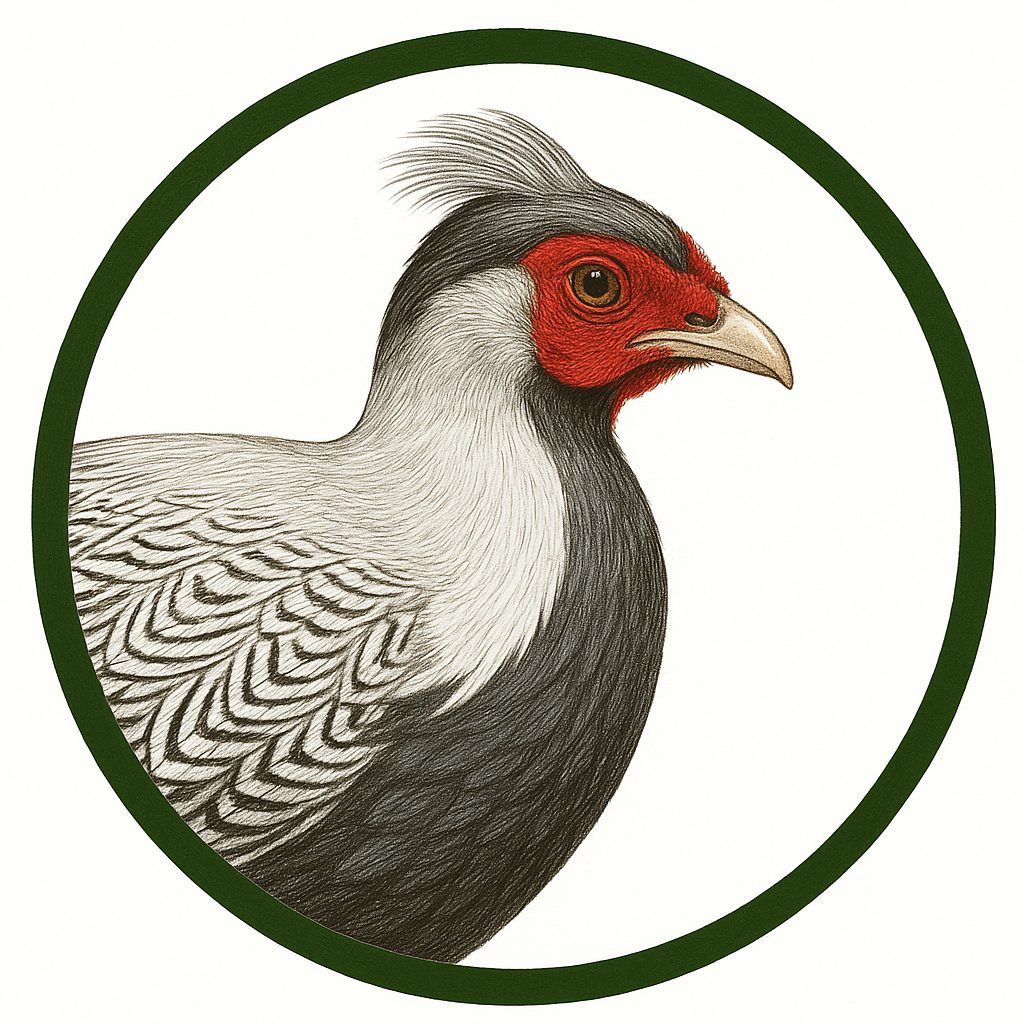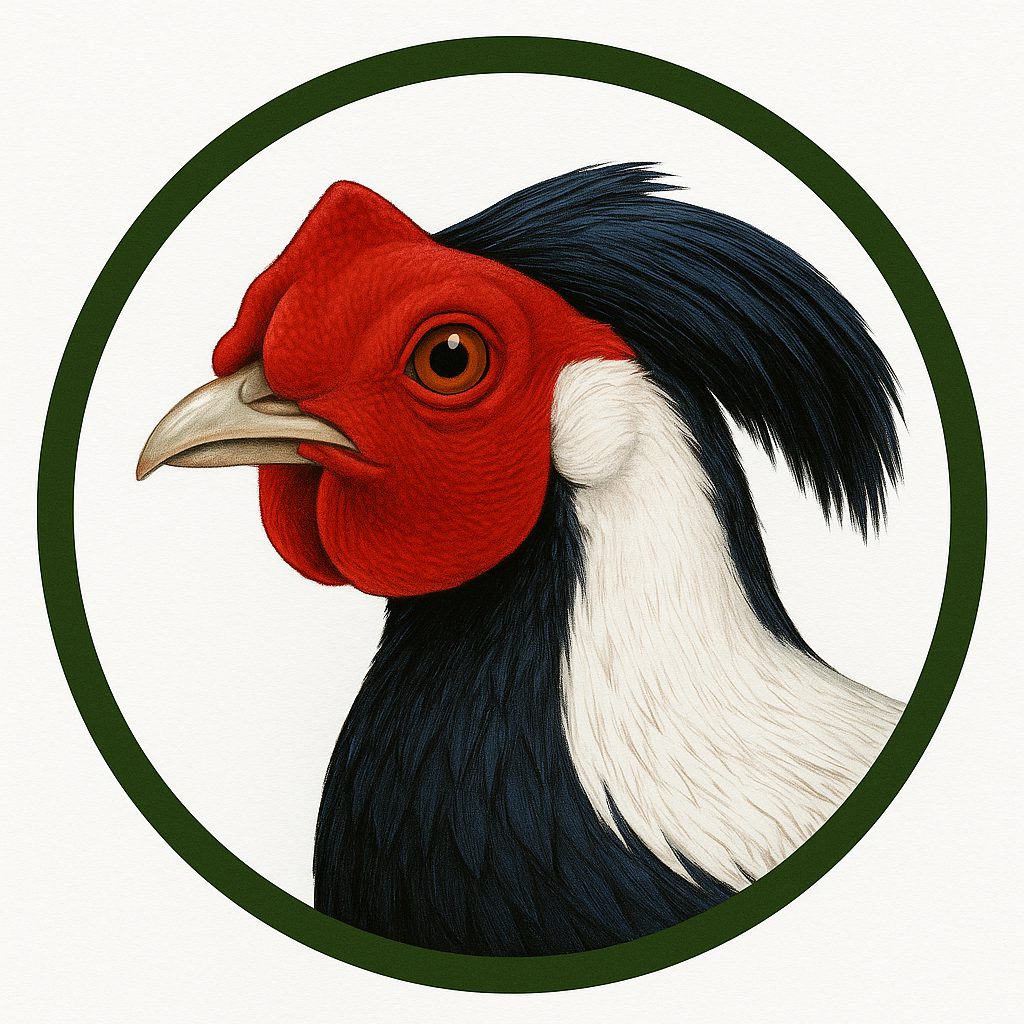
The silver pheasant (Lophura nycthemera) is a galliform bird of the family Phasianidae, native to China and Indochina. Its unmistakable plumage combines black with a pale silvery tone that covers the wings and tail.
| Kingdom | Animalia |
| Phylum | Chordata |
| Class | Aves |
| Order | Galliformes |
| Family | Phasianidae |
| Genus | Lophura |
| Species | Lophura nycthemera |
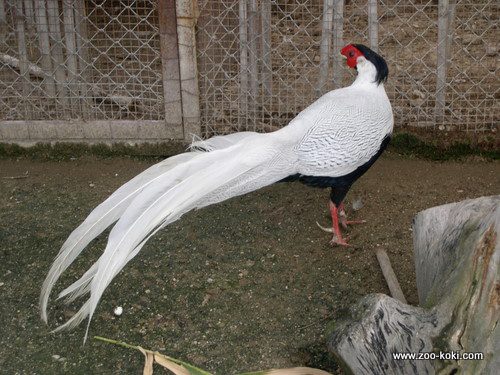
The silver pheasant (Lophura nycthemera) is a galliform bird of the family Phasianidae, native to China and Indochina. Its unmistakable plumage combines black with a pale silvery tone that covers the wings and tail.
There is marked sexual dimorphism: the male shows a contrast of silvery white and jet black, with bare red facial skin and a dark crest, whereas the female has much more discreet brown plumage that serves as camouflage during incubation.
It is found in the mountain forests and wooded areas of southern China and Indochina, including Vietnam and Laos, where it lives in dense forest as well as in scrub and bamboo, generally at middle altitudes.
It has an omnivorous diet that includes seeds, berries, shoots and tender leaves, as well as insects and other small invertebrates, which it finds by scratching through the leaf litter, especially at dawn and dusk.
It builds its nest on the ground, hidden among the undergrowth, where the female incubates a clutch of several eggs alone for about 25-27 days. During courtship, the male performs showy displays, spreading his tail and wings in front of the female, and sometimes also helps to look after the chicks if the female is not present.
It is one of the most common pheasant species in parks and zoos around the world thanks to its showy plumage and its relatively docile nature in captivity, which has made it easy to breed for centuries.