
The sweet orange is an evergreen fruit tree, a natural hybrid between the pomelo and the mandarin originating in Asia, famous for its fragrant orange blossom and its oranges.
| Kingdom | Plantae |
| Division | Magnoliophyta |
| Class | Magnoliopsida |
| Order | Sapindales |
| Family | Rutaceae |
| Genus | Citrus |
| Species | Citrus × sinensis |
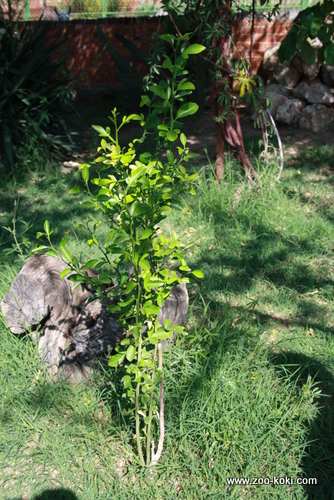
The orange tree is an evergreen tree that normally reaches between 3 and 5 metres in height, with a rounded or pyramidal crown and oval leaves 7 to 10 cm long.
Its flowers, known as orange blossom (“azahar” in Spanish), are white and highly aromatic. The fruit, the orange, is a sweet hesperidium with numerous commercial varieties, such as navel, blond and blood oranges.
The sweet orange is in fact a natural hybrid arising from a cross between the pomelo and the mandarin, with an origin placed in India, Pakistan, Vietnam and south-eastern China, from where it reached the West through Arab traders.
The Spanish word “naranja” comes from the Sanskrit nâranga, passing through Arabic and Old Provençal. In English, the initial “n” was lost through confusion with the article, giving rise to the word “orange”. Brazil is today the world's largest producer of oranges.