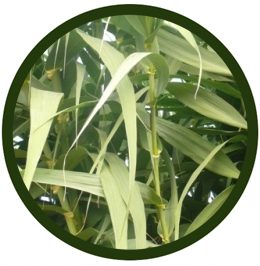
The giant reed is a giant, very fast-growing grass, common along the banks of rivers and irrigation channels throughout the Iberian Peninsula.
| Kingdom | Plantae |
| Division | Magnoliophyta |
| Class | Liliopsida |
| Order | Poales |
| Family | Poaceae |
| Genus | Arundo |
| Species | Arundo donax |
It is a perennial herbaceous plant with a woody appearance, with rigid, hollow stems (canes) that can reach 3 to 6 metres in height, occasionally up to 10. Its leaves are long and broad, arranged along the stem.
It reproduces mainly vegetatively, from its underground rhizomes, forming dense reed beds that quickly colonise the land.
It is thought to have originated in southern Asia, between the Caspian Sea and the Indus Valley, although it has been cultivated and naturalised in the Mediterranean basin since very ancient times. It grows beside rivers, irrigation channels, dry watercourses and other damp places, tolerating a wide variety of soils.
Its canes have traditionally been used to make reeds for wind instruments, wattle screens, basketry and plant stakes. Because of its enormous invasive capacity, the International Union for Conservation of Nature includes it among the hundred most harmful invasive alien species in the world.