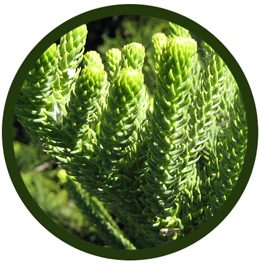
The Norfolk Island pine is a conifer of very symmetrical, elegant habit, native to a small Pacific island and widely used as an ornamental tree.
| Kingdom | Plantae |
| Division | Pinophyta |
| Class | Pinopsida |
| Order | Pinales |
| Family | Araucariaceae |
| Genus | Araucaria |
| Species | Araucaria heterophylla |
It is an evergreen tree with a very symmetrical, conical outline, with branches arranged in regular whorls that give it an almost geometric appearance, especially in young specimens. Its leaves are small, needle-like and slightly curved, softer than those of a true pine.
It is endemic to Norfolk Island, a small Australian territory in the Pacific Ocean between New Zealand and New Caledonia, where it was discovered during Captain Cook's second voyage, in the late 18th century.
Despite its name, it is not a true pine (genus Pinus) but an araucaria, related to the Chilean pine or monkey puzzle tree. Because of its pyramidal, symmetrical shape when young, it is one of the most widely used ornamental conifers in gardens, on seafront promenades and as a potted ‘Christmas tree’.